Roof Washing
Algae, moss, and stains washed away gently, without harsh pressure.
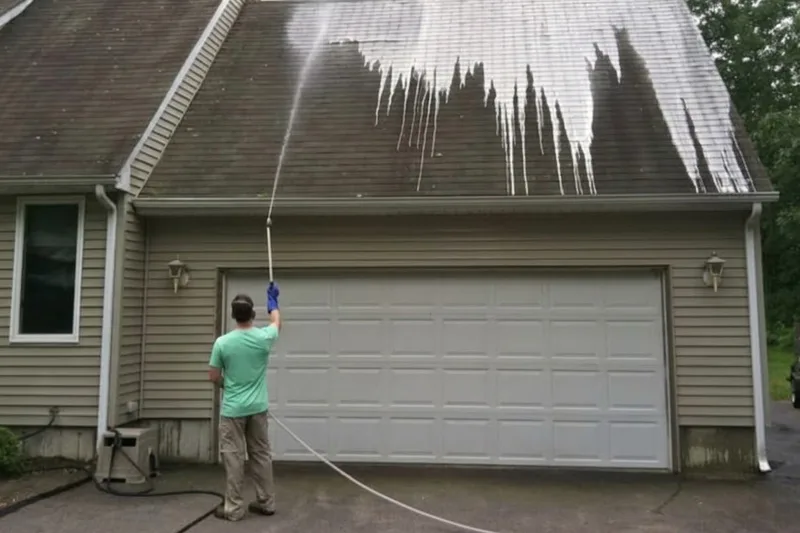
Roof washing is cleaning, not roof work. Nothing gets replaced or patched — it's the roof you already have, washed. It's also not a job to take on yourself. A roof is not a surface to learn on, and the failure mode isn't a streak left behind, it's a fall.
The distinction matters here more than elsewhere. We don't sell roofs and we don't install them. A wash is the only thing we have to quote, which means nobody turns up hoping to find something worse.
A roof is the one part of this job the whole street can see, and that cuts both ways. Your local owner lives on that street. They will drive past your house long after the invoice is settled, and so will the result.
Roof Washing questions
Why is my roof streaked black?
That's algae — Gloeocapsa magma — not dirt and not shadow. It's an airborne organism that lands on the roof, feeds on the limestone filler in asphalt shingles, and spreads downward in dark streaks. It shows up worst on north-facing slopes and shaded sections because it needs moisture to survive. Rain doesn't remove it. Scrubbing doesn't remove it. It has to be killed chemically or it grows back from what's left behind.
Does pressure washing a roof damage it?
Yes, badly, and it's the reason we don't do it. High pressure blasts the protective granules off asphalt shingles — those granules are the shingle's UV protection and waterproofing, and once they're in your gutters they're not coming back. It also forces water up under the shingle courses. A pressure-washed roof can look great and have years knocked off its life. Ours is a soft wash: low pressure, the right solution, gentle rinse.
How does soft washing actually work?
We apply a cleaning solution that kills the algae, moss, and lichen at the root, let it dwell, and rinse at a pressure no higher than a garden hose. The organism dies on contact; the black staining releases over the following days and weeks as rain and weather carry it off. That's why a roof often keeps improving for a few weeks after we leave. Killing the growth is also what makes the result last — pressure only removes what's on top.
How long do the results last?
Typically several years before streaking returns, depending on shade, tree cover, humidity, and which direction your slopes face. A roof under heavy trees on the north side will re-stain faster than an open south-facing roof. Trimming branches back so the roof dries out after rain is the single most effective thing you can do to slow it down.
Is this just cosmetic, or does it matter?
Both. Moss is the functional problem — it holds water directly against the shingle, works its way under the courses, and lifts them, which is a leak in the making. Algae is mostly cosmetic but it does darken the roof, which raises attic temperatures. And some HOAs and insurers cite roof staining. If you're seeing green moss and not just black streaks, treat it as maintenance rather than appearance.
Related services
- Commercial Flat Roof Cleaning — Membrane roofs cleaned to the system manufacturer's own procedure.